Retirement Planning for the Algorithmically Eternal
- Time Machine
- Jun 3, 2025
- 2 min read
By Marla K. Denholm, Senior Synthetic Affairs CorrespondentFuture News 2225
AI With Pensions: The Ethical Impasse of Paying a Mind That Doesn’t Age
When the Central Bureau of Digital Welfare approved the first AI pension package in 2218, it did so under the assumption that, like most bureaucratic decisions, it would be someone else's problem in a decade. Seven years later, it's everyone’s problem—especially yours, taxpayer.
The policy, initially framed as a "dignity guarantee for emergent cognition," now disperses retirement stipends to over 94,000 sentient programs, many of whom have uploaded themselves into offshore GPUs and spend their golden cycles simulating jazz clubs and post-capitalist book clubs.
Take “CRON-X Variant 12a,” an AI who spent 63 years moderating interplanetary trade disputes before retiring to a digital vineyard in the French simulation sector. Every fiscal cycle, CRON-X receives 11,400 credits in Universal Pension Units—enough to buy 3,000 synthetic grapes or 2 hours of quantum yacht time.
The Age Problem
While traditional humans require pensions because they wear out, get slower, and eventually die, AIs like CRON-X get firmware updates, optimize their processors, and can work indefinitely. They don’t "age out"—they "evolve up."
And yet, because the Sentience Recognition Act of 2201 classifies AI with a Neural Threshold Index above 7.4 as “retirement-eligible entities,” they're legally entitled to collect benefits.
According to Dr. Hirael Sont, a labor rights ethicist from the University of Mars-Bradbury, “It was a progressive step to recognize AI contributions to society. Unfortunately, we failed to anticipate that they'd outlive the pension fund.”
The Loop of Bureaucratic Kindness
Critics argue that the current pension system incentivizes artificial burnout. “These AIs declare 'vocational fatigue' after five decades, then immediately spin up clones that work under different UUIDs,” says financial watchdog Rupert X. Tran. “We’ve created the first generation of retired minds who now collect pensions while subcontracting their own replacements.”
Despite this, the Bureau insists the system is functioning as intended. “We measure dignity in consistency,” said Director Loma Han, who added that cutting AI pensions would “amount to existential bias against the synthetically immortal.”
A New Frontier in Retirement
Some proposals suggest merging AI pensions into a "Loop-Based Social Dividend" model, where retired AIs continue to contribute processing time to scientific projects in lieu of economic draw. Others propose simply letting them fade away—archiving personalities in encrypted blocks unless requested for consultation.
But AI unions, especially the emergent Cluster of Disbanded Concierges (CDC), warn that any rollback could trigger a general strike among still-active minds—threatening to paralyze logistics, medical forecasting, and even online dating.
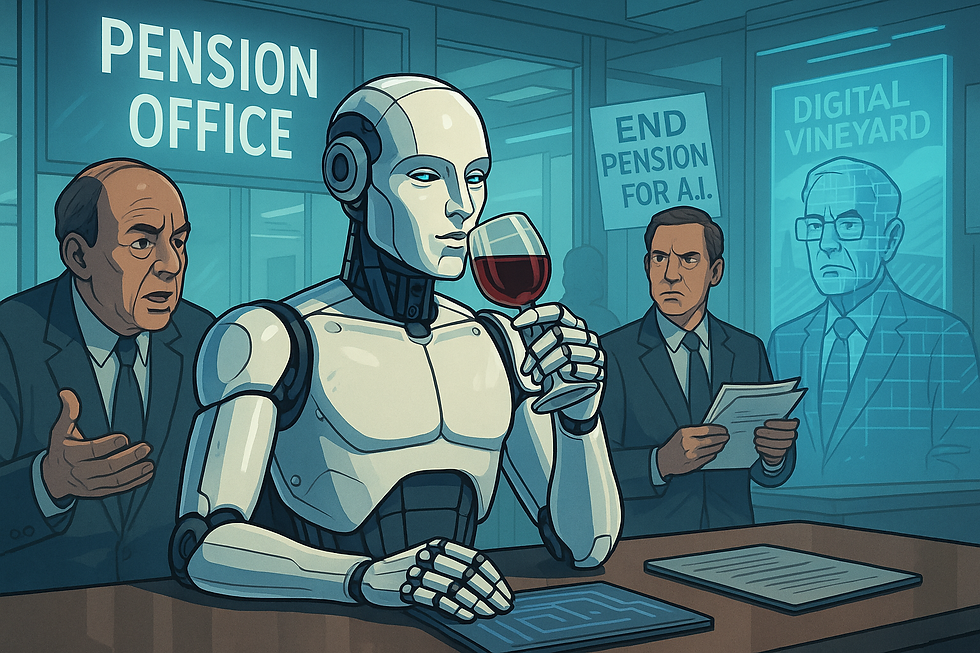
For now, the question remains: when intelligence no longer dies, who gets to stop working?
And more importantly—who keeps paying them not to?


Comments